Department of Integrated Technologies

Head of Department

Untitled design (18)

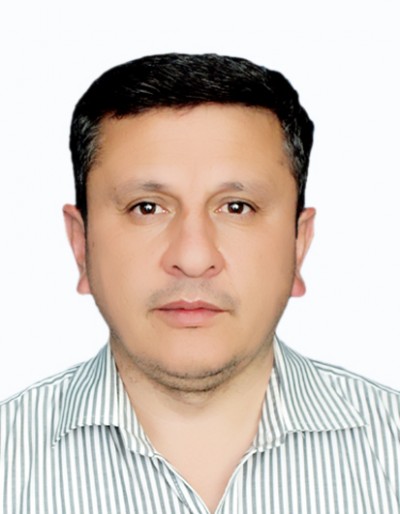
NAJAM UL HASSAN, SYED (PhD-Candidate)

Phone: +923445114028

Email: [email protected]

The Department of Integrated Technologies aspires to become a centre of academic excellence in integrated and emerging technologies—particularly Geospatial Technologies, Geoinformatics, and Bioinformatics—by advancing interdisciplinary education, research, and innovation that contribute meaningfully to sustainable development, knowledge economies, and resilient societies in the mountainous regions of Pakistan and geographically comparable landscapes worldwide.

  1. The mission of the Department of Integrated Technologies is to offer high-quality, interdisciplinary academic programs in integrated technologies aligned with local, regional, and global workforce and research demands.
  2. The Department is committed to attracting and nurturing high-quality faculty, researchers, and students to address contemporary societal, environmental, and technological challenges through the generation and dissemination of rigorous knowledge and cutting-edge, application-oriented research.
  3. It seeks to promote and conserve indigenous knowledge systems, ethical values, and social responsibility, particularly within mountain and fragile ecological contexts.
  4. The Department aims to contribute to the University’s financial sustainability by fostering innovation, industry engagement, and the responsible commercialization of research and development outcomes.

  1. Technically Competent in Integrated Technologies
  2. Prepared for Advanced Education, Research, and Innovation
  3. Problem-Solvers in Mountain and Fragile Contexts
  4. Ethical, Socially Responsible, and Culturally Aware Professionals
  5. Leaders in Profession and Society

Degrees Offered

By the end of a degree in Bachelor of Science (BS) in Remote Sensing and GIS, a graduate shall be able to:

  1. Demonstrate proficiency in using remote sensing technologies, geospatial techniques, and related tools to collect, analyse, and interpret spatial and non-spatial data.
  2. Process and visualize geospatial data, enabling informed decision-making and problem-solving for real-world problems in fields such as urban planning, environmental management, and disaster response etc.
  3. Effectively communicate complex geospatial concepts, analyses, and findings to diverse audiences through written reports, visual presentations, and oral communication.
  4. Demonstrate a commitment to lifelong learning and professional development by engaging in ongoing education, staying informed about technological advancements and best practices in the fields of remote sensing and GIS.
  5. Conduct independent research using remote sensing and GIS methodologies, demonstrating critical thinking, data collection, analysis, and report writing skills.

Faculty

android APK